Trust is Built in Everyday Moments: Four Practical Workflows to Help You Navigate Trust in the Workplace
Key Takeaways
Trust at work doesn’t come from big gestures; it’s created in everyday interactions and decisions.
Using intentional reflection workflows helps people act with reliability, care, sincerity, and competence.
The reliability workflow focuses on clear promises and follow-through.
Care invites you to consider the impact of your choices on others.
Sincerity encourages alignment between what you mean and what you communicate.
The competence workflow centres on shared clarity of expectations.
These workflows act as guides to pause, reflect, and choose actions that strengthen trust over time.
We all want to be trusted.
And most of us genuinely intend to act in trustworthy ways.
Yet trust is rarely built through big gestures or grand statements. It’s shaped—slowly and quietly—in everyday moments: what we say, what we do, what we follow through on, and what we avoid. Often, when trust feels strained, it isn’t because of bad intent, but because of unclear expectations, missed signals, or unexamined assumptions.
That’s where these workflows come in.
Inspired by Charles Feltman’s framework of the four distinctions of trust—reliability, care, sincerity, and competence—we created four simple decision-tree workflows to support more intentional, trust-building choices at work.
Not as rules.
Not as answers.
But as guides.
Why workflows instead of rules?
Trust is contextual. What builds trust in one situation may undermine it in another. (Learn more about the importance of trust here) The goal isn’t to follow a script or get it “right,” but to pause long enough to notice what’s happening and choose your next step with greater awareness.
These workflows are designed to help you:
Slow down in moments of tension or uncertainty
Reflect on how your actions may be experienced by others
Clarify expectations before trust erodes
Navigate grey areas with care and intention
You can move through them on your own, use them as conversation starters, or revisit them when something feels off but you’re not quite sure why.
The four workflows
1. Reliability: Did we make (and keep) a clear promise?
Reliability is about follow-through—but it starts even earlier, with clarity.
This workflow helps you reflect on questions like:
Was a clear request actually made?
Was there a response?
Was a commitment clearly agreed to?
Was the promise fulfilled?
Sometimes what feels like a broken promise is actually an incomplete or unclear request. This workflow helps distinguish between those moments and supports more productive follow-up—without jumping straight to blame.

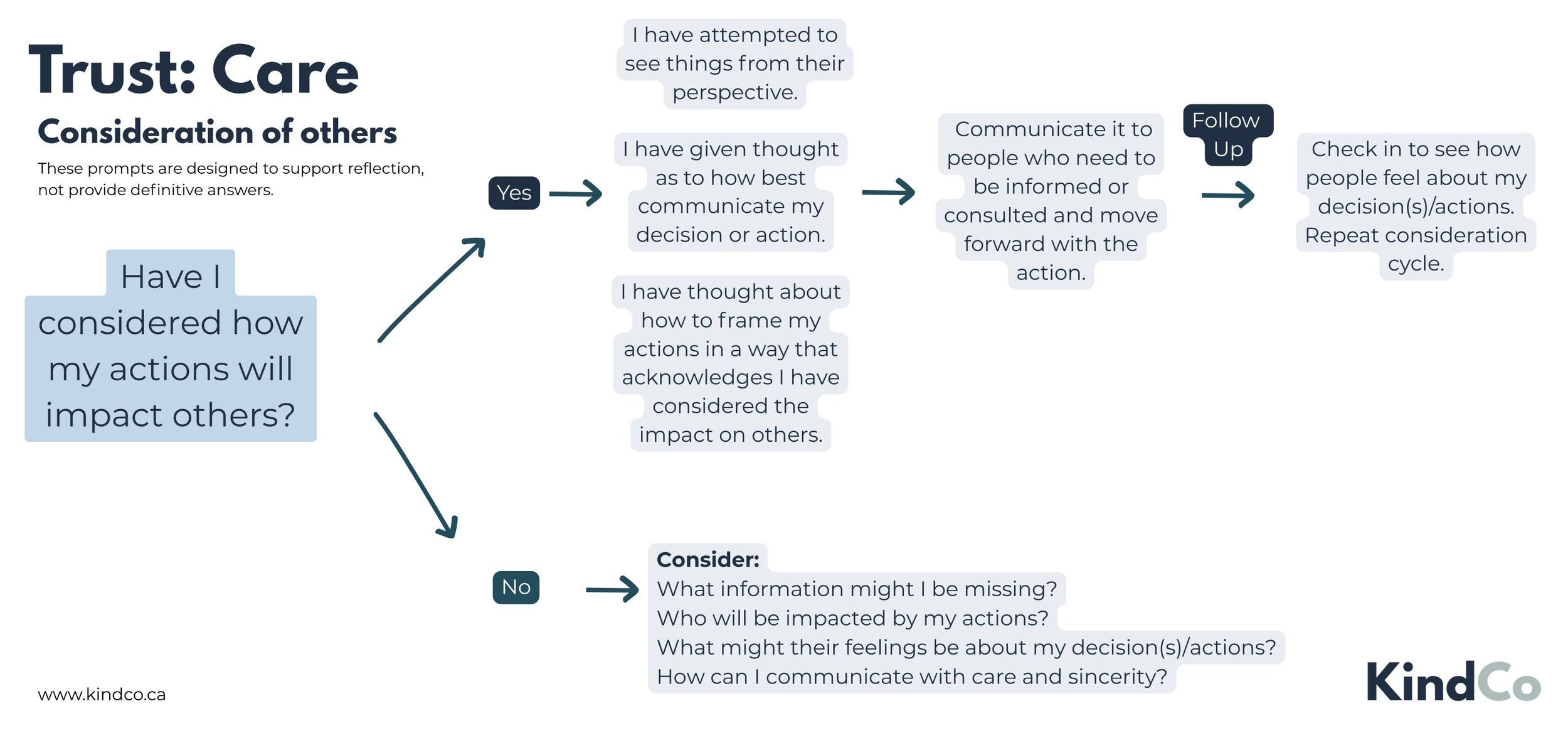
2. Care: Have I considered the impact on others?
Care is about demonstrating that other people matter—not just in intention, but in action.
This workflow invites you to pause and consider:
Who might be impacted by this decision?
What information might I be missing?
How might others experience this?
How can I communicate with care and sincerity?
It reinforces that trust grows when people feel seen, considered, and informed—especially when decisions are complex or imperfect.
3. Sincerity: Do my words match what’s true for me?
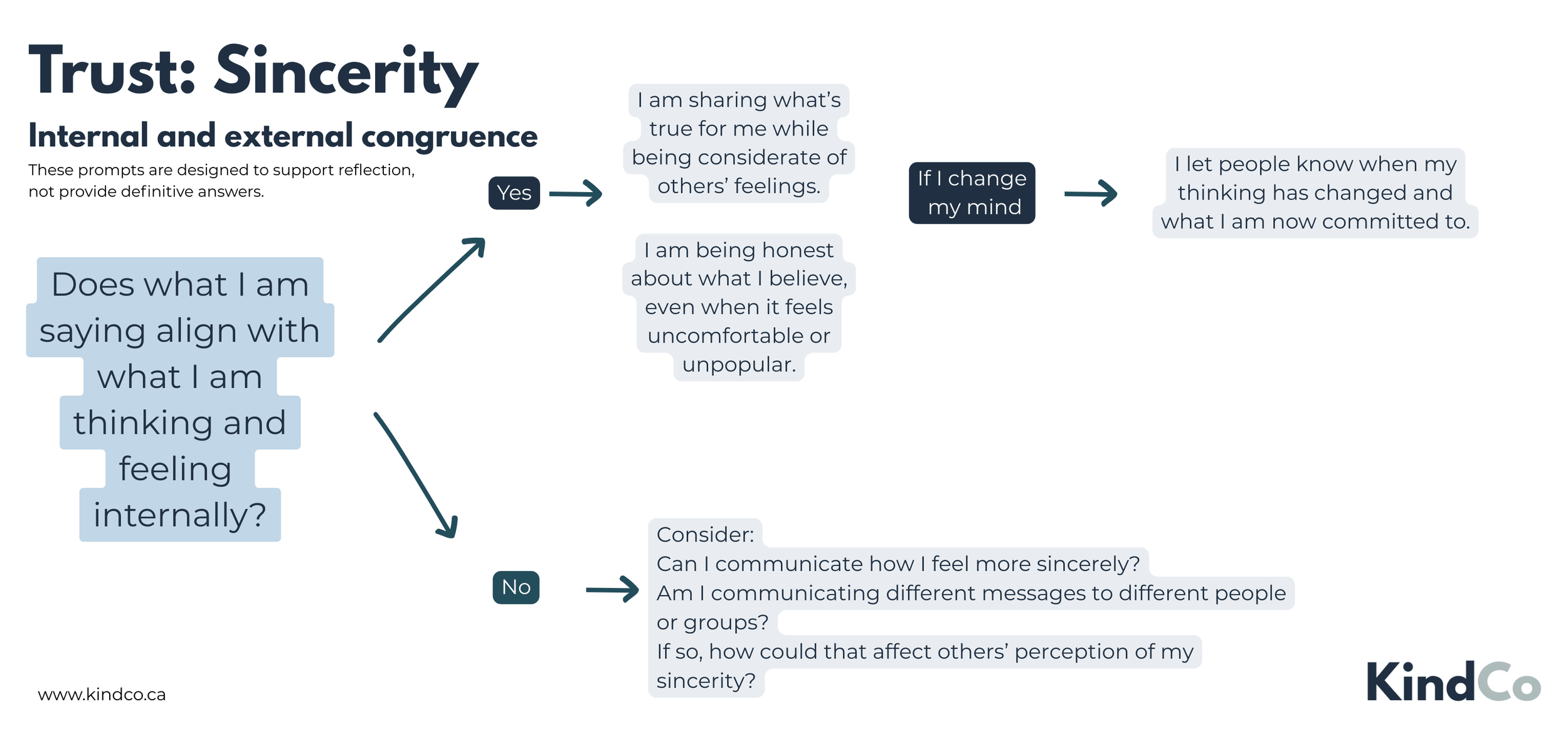
Sincerity is about alignment between what we think, feel, and say.
This workflow supports reflection when:
A message feels uncomfortable or unpopular
You notice mixed signals or inconsistencies
Your thinking has changed and needs to be communicated
Sincerity doesn’t mean saying everything, all the time. It means communicating honestly and thoughtfully, while remaining considerate of others’ experiences.
4. Competence: Have we clearly defined the standard?
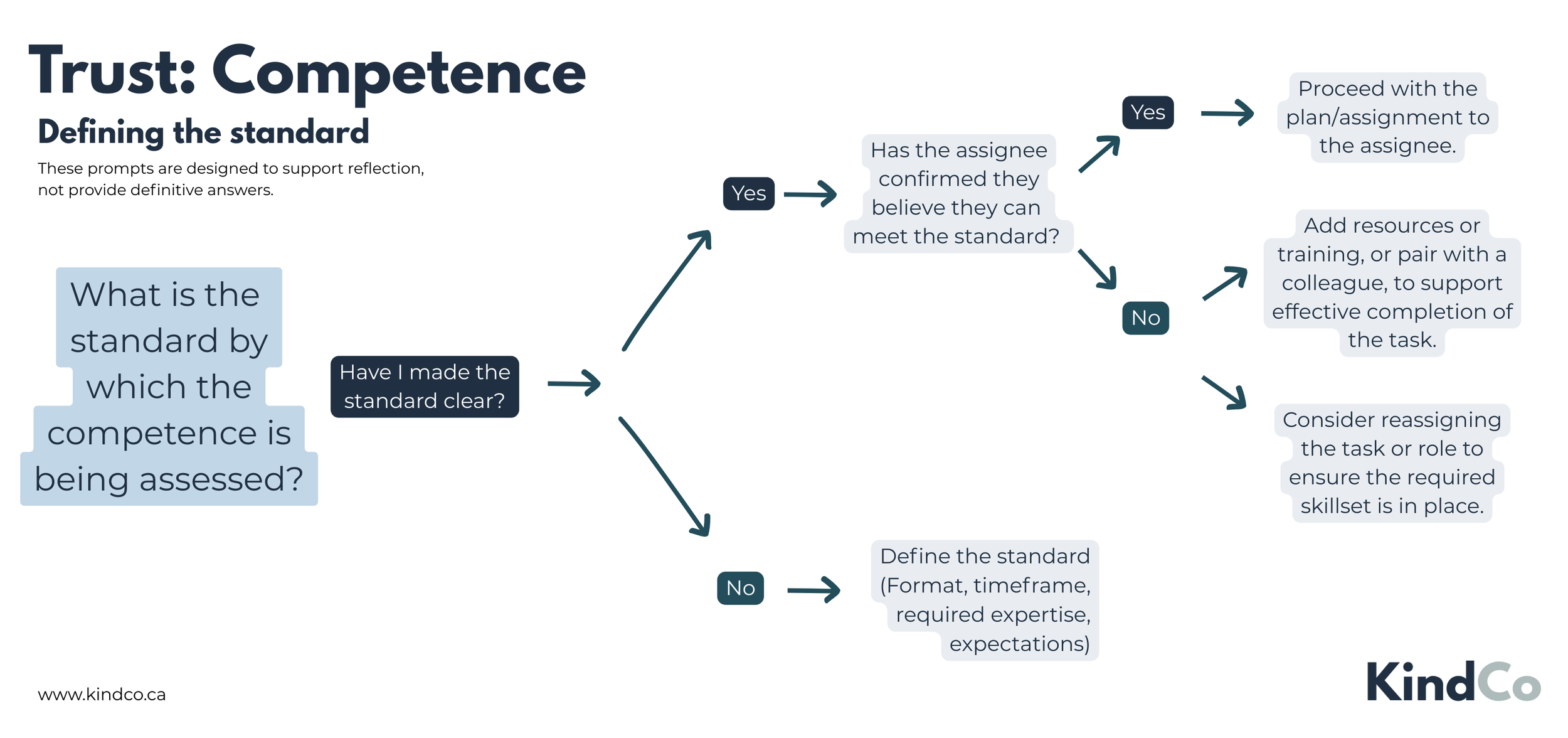
Competence isn’t just about skill—it’s about shared expectations.
This workflow helps clarify:
What standard is being used?
Has that standard been clearly defined?
Does the person responsible believe they can meet it?
What support might be needed?
By focusing on clarity, resourcing, and fit, this workflow reframes competence as a shared responsibility rather than an individual judgment.
How to use these workflows
These workflows are meant to support reflection, not provide definitive answers. You don’t need to move through them line by line or land on a single “correct” outcome. Instead, use them as prompts to help you pause, consider your options, and choose actions that are more likely to strengthen trust over time.
Trust isn’t built perfectly.
It’s built intentionally.
Ready to Build Trust Together?
If you want help applying these trust distinctions with your team, in practical, interactive sessions, our KindCo Trust Workshop gives your group shared language, tools, and agreements that lead to faster decisions and stronger collaboration. Learn more about the trust workshop.